
Protecting the Antarctic Environment
Conservation
Antarctica is unique as it is an isolated landmass with no indigenous peoples and permanent human settlements surrounded by a wide, cold and stormy ocean. There are few people who can perceive the benefits of Antarctica who also have clear opinions based on personal experience of the continent. The whole of mankind benefits from this isolated continent and its ecosystems that few will ever visit personally. It is a global resource both practically and spiritually that must be managed for the benefit of all.
Why Protect Antarctica?
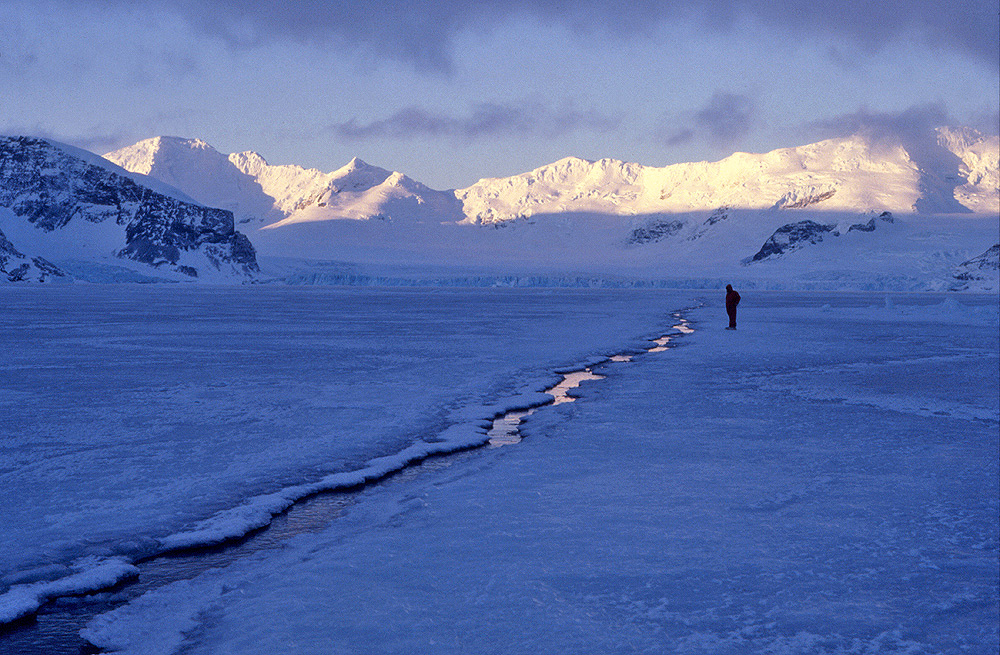
A tide-crack a few
miles long between islands
To some Antarctica is simply a cold, distant uninviting and dangerous place with little to offer the world, so "Why Protect Antarctica" may seem to be an obvious question to ask. Even if you don't think it's worth asking, it's worth being able to answer it.
1 - Antarctica is the last and largest unspoiled wilderness area on Earth. It is a reminder of what the planet was like before the influence of man, its unspoiled beauty has inspired people since it was first glimpsed. It has huge expanses of the most pristine oceans on earth with an enormous variety and quantity of marine life, much of which is only found in Antarctica and no-where else.
2 - Antarctica belongs to no-one and everyone, there were never any native people living there and because environmental conditions are so difficult it was never settled in the usual sense and so isn't a part of any one country. It is the last frontier in many ways including emotionally and spiritually. We should be able to set one place apart.
3- Antarctica is a continent for science, as it is so unspoiled it acts as a laboratory for the rest of the world where changes can be measured in isolation from the effects of man. It is crucial for instance in helping us to understand the effects of global warming including using ice cores going back hundreds of thousands of years from the ice cap which is up to 4km thick
What Conservation Measures are now in place in Antarctica?
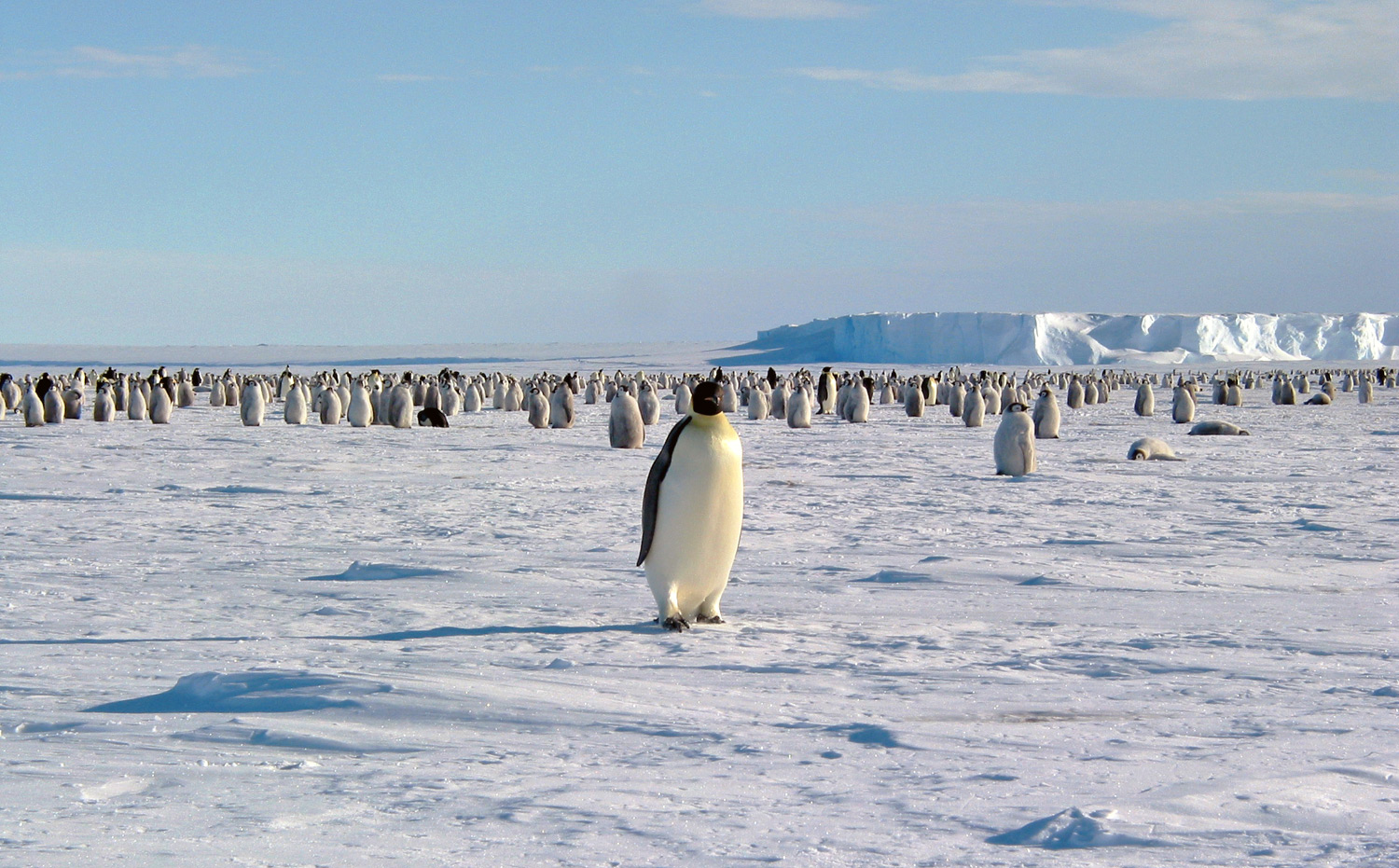
Until the 1960s, some species of whales and seals were taken to the brink of extinction by human activities in Antarctica. Waste and garbage was left where it fell, burnt on open fires or dumped in the ocean. Fisheries were completely unregulated. Penguin and other bird colonies often had their eggs harvested by personnel stationed nearby.
Over the years since the Antarctic Treaty came into force in 1961, ever greater environmental awareness has led to increasing regulation by the Antarctic Treaty System. All plants and animals in Antarctica are now protected and there are measures in place to prevent pollution of this the worlds most pristine environment.
There are many resolutions and measures for the protection of Antarctica and its fauna (animals) and flora (plants). In brief they state that:
-
No Antarctic bird or mammal can be killed or captured without a permit - granted only for validated scientific reasons.
-
Measures must be taken to minimize harmful interference with wildlife and control the introduction of non-native species - animal or plant. To the point of not taking soil or growing compost to Antarctica as it may contain plant seeds, fungal spores or adults, eggs or larvae of any number of soil-dwelling invertebrates.
-
The establishment of specially protected areas to protect sites of outstanding scientific interest and designate specially protected species.
-
Seals in particular are covered by a 1972 convention designed to prevent the resumption of sealing, killing of both Ross and Antarctic fur seals is totally prohibited and catch limits are set deliberately at low levels for other species. All six seal species that breed in the Antarctic are covered.
-
Commercial fisheries in the Southern Ocean are controlled by the CCAMLR - Convention on the Conservation of Antarctic Marine Living Resources. The aim of the Convention is to conserve marine life of the Southern Ocean - this does not exclude harvesting carried out in a rational manner however.
-
The discharge into the sea within the Antarctic Treaty Area of all toxic and noxious chemicals, oil and oily wastes, plastics and other forms of non-biodegradable rubbish, is prohibited. The discharge of other wastes (such as sewage from ships and bases) is strictly regulated.
-
Mining has been prohibited.
Permits for Travelling to Antarctica
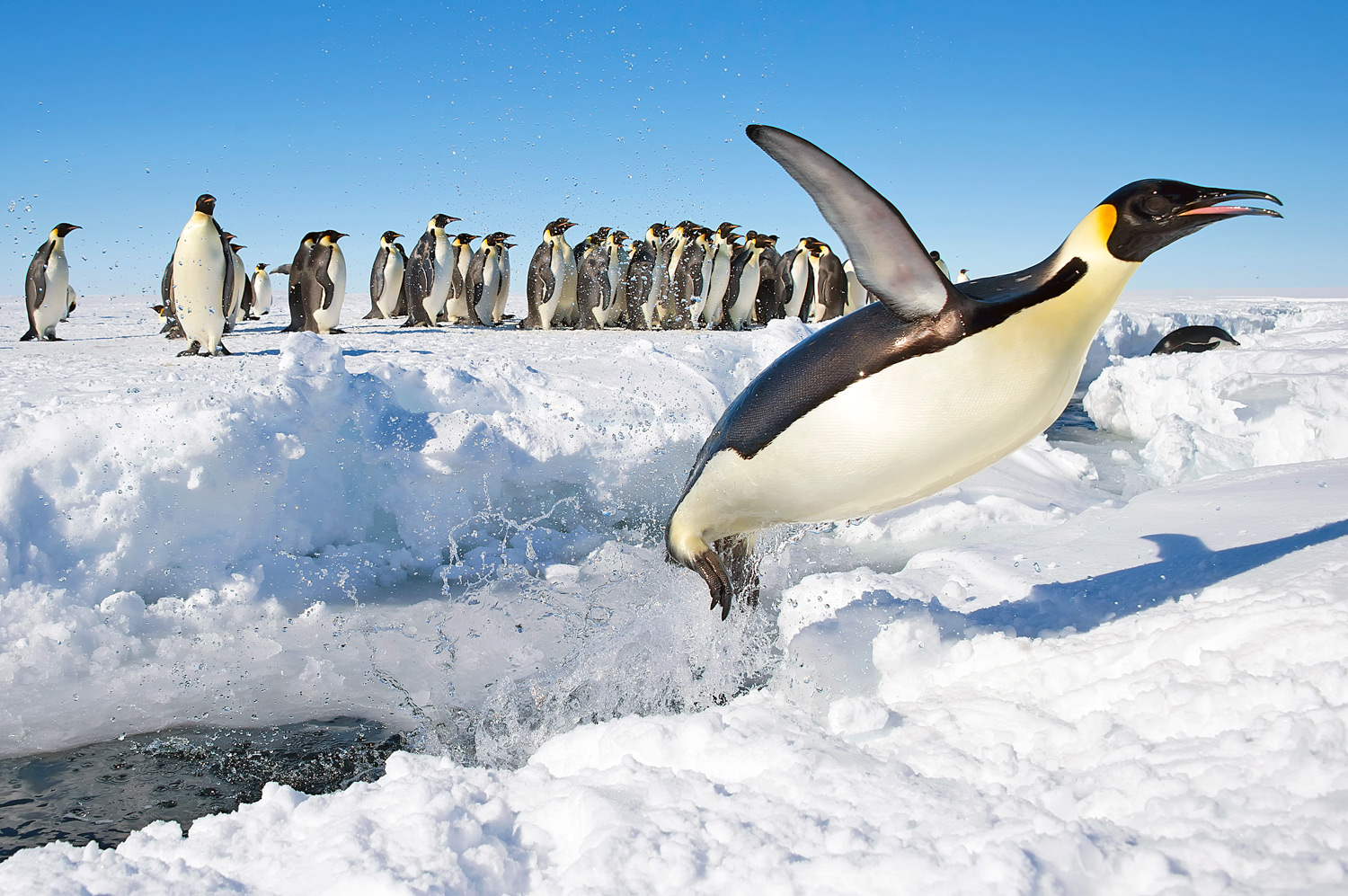
The Environmental Protocol of the Antarctic Treaty, sometimes called the "Madrid Protocol", became law in 1998 after legislation in each of the member countries. One of the ways in which this protects Antarctica is by only allowing visitors to Antarctica by member nations as long as they are given a permit to do so. The granting of a permit is dependent on the visitors agreeing to adhere to certain rules and guidelines. Each nations rules are not the same in the detail, though they are similar in the general principles in that they adhere to the Antarctic Treaty.
British citizens for example, require a permit from the Secretary of State for Foreign & Commonwealth Affairs for the following activities:-
British expeditions travelling to Antarctica.
-
British stations in Antarctica.
-
British registered vessels and aircraft going to Antarctica.
-
Mineral resource activities for scientific research or for certain construction purposes.
-
The taking of, or harmful interference with, fauna or flora.
-
The introduction of non-native animals or plants.
-
Entry into protected areas under the Protocol ( Antarctic Specially Protected Areas - ASPA) or under the Convention on the Conservation of Antarctic Marine Living Resources (CCAMLR) (CEMP Monitoring Sites)
From the UK Foreign and Commonwealth office,
London:
details
(other nations have very similar
rules about their citizens in Antarctica)
The Antarctic Act 1994 creates
a number of criminal offences. For example, without a permit
issued by the Secretary of State it is illegal to: enter
Antarctica; take a vessel or aircraft into the Antarctic
Treaty area; or stay on or construct a station/base.
The Act also prohibits any minerals-related activities, other than in accordance with a permit for scientific research; the harming or disturbing of the native flora and fauna; or the introduction of non-native species or entry into areas protected under either the Protocol or the Convention for the Conservation of Antarctic Marine Living Resources (CCAMLR), except in accordance with a permit.
It is illegal under the Act as amended by the Antarctic Act 2013 to damage or destroy objects from a historical site or monument but under Clause 15 4a & b, objects may be removed for conservation or repair.
It is also illegal to breach a condition of a permit or fail to produce a permit when required to do so.
In the UK, the penalty for infringement of these rules can be up to two years imprisonment, a fine, or both, anyone found guilty may be banned from travelling to Antarctica in the future.
Other signatory nations of the Antarctic Treaty have similar regulations in place, the rules come from the internationally agreed Antarctic Treaty and not from the laws of individual countries. Should individuals from those countries not abide by these rules, they will face arrest and the consequences of the law in their home country on their return.
Here's and example of what can go wrong if you don't follow the procedures - this led to a $50,000 fine in the Norwegian courts.
If someone belonging to a country that is not a Treaty signatory commits any offence against the Antarctic Treaty, he or she could be prosecuted according to the laws of the country that has claim to that sector of Antarctica where the offence was committed.
Examples of how these regulations are put into practice
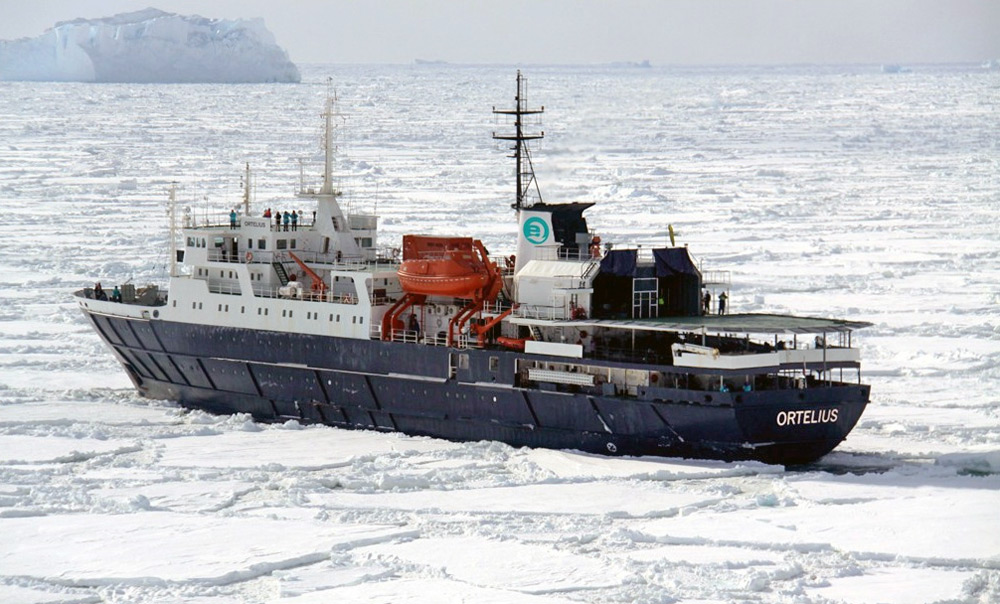
Waste from Ships
- The discharge of any oil or oily mixture, bulk chemicals
or garbage from a ship is prohibited in Antarctica and
must be discharged at port reception facilities outside
the region. Many ships operating in Antarctic waters retain
oil and oily mixtures on board the ship. Oily water separators
are often fitted and the discharge of oil from ships is
monitored by maintaining an Oil Record Book, as required
by the
International Maritime Organization (IMO).
- Sewage from ships is usually passed through a
biological treatment plant that meets the requirements of
the IMO before discharge. If these systems break down in
the Antarctic, ships will avoid discharging untreated raw
sewage within 12 nautical miles of shore.
- Food waste is passed through a waste disposal
unit that shreds the waste so that it will pass through
a mesh size of less than 25 mm, discharge is then at least
12 nautical miles from shore. If ships are within 12 nautical
miles of shore, the waste is held in holding tanks until
it can be discharged. Large bones and other food wastes
which are difficult to shred are frozen and disposed of
at port reception facilities outside Antarctica.
- Other waste generated on ships is stored on board until it can be disposed of outside Antarctica. Shredders are used to process glass and small metal waste. Compactors are used to bale plastic. Paper and cardboard are burnt in high temperature marine incinerators. Waste food wrappings are frozen for later disposal in port.
Waste from Antarctic Bases
- The dumping of waste or chemicals on land or
at sea, or open burning of rubbish are all prohibited.
Instead, wastes are separated at source, processed using
a range of compacting and shredding equipment to reduce
volume, and then removed.
- Waste from Antarctic bases is packaged up and
shipped out of Antarctica for disposal by licensed
waste contractors. Dumping at sea or burning in Antarctica
are now not permitted.
- Certain bases as permitted under the Environmental
Protocol, discharge sewage and food waste into the sea.
At other bases they are discharged into ice pits. These
wastes are not removed from Antarctica because of the health
risks involved in shipping large quantities over long distances.
The extent and the environmental effects of the release
of sewage and food waste into the near shore marine environment
is monitored on an ongoing basis. Such effluent has so far
been shown to have only minor and local impact. Despite
this an increasing number of bases are installing biological
sewage treatment plants.
- Many national programmes carry out an annual audit of the quantities of waste generated at research stations, field camps and ships.
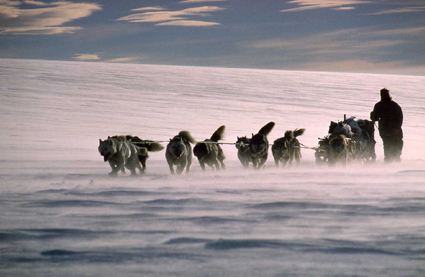 Sled
Dogs in Antarctica
Sled
Dogs in AntarcticaIn 1991 the fear that distemper from dogs could spread to seals led to a new clause in the Antarctic Treaty.
"Dogs shall
not be introduced onto land or ice shelves and dogs currently
in those areas shall be removed by April 1st 1994"
Picture credits, copyright pictures used by permission: Emperors-Hannes-Grobe-AWI-CC3-unported1500 / Emperor penguin emerging from sea - Christopher Michel from San Francisco, used under Creative Commons 2.0 generic license /