
Extreme Cold Weather Winter Boots
Antarctic Boots
The correct footwear is vital for an extreme cold environment.
The warmest winter boots for Antarctica or any cold conditions.
 This is the USA page |
Australia / NZ
This is the USA page |
Australia / NZ
 | UK
| UK

Antarctic Winter Boots
Extreme cold and dry conditions
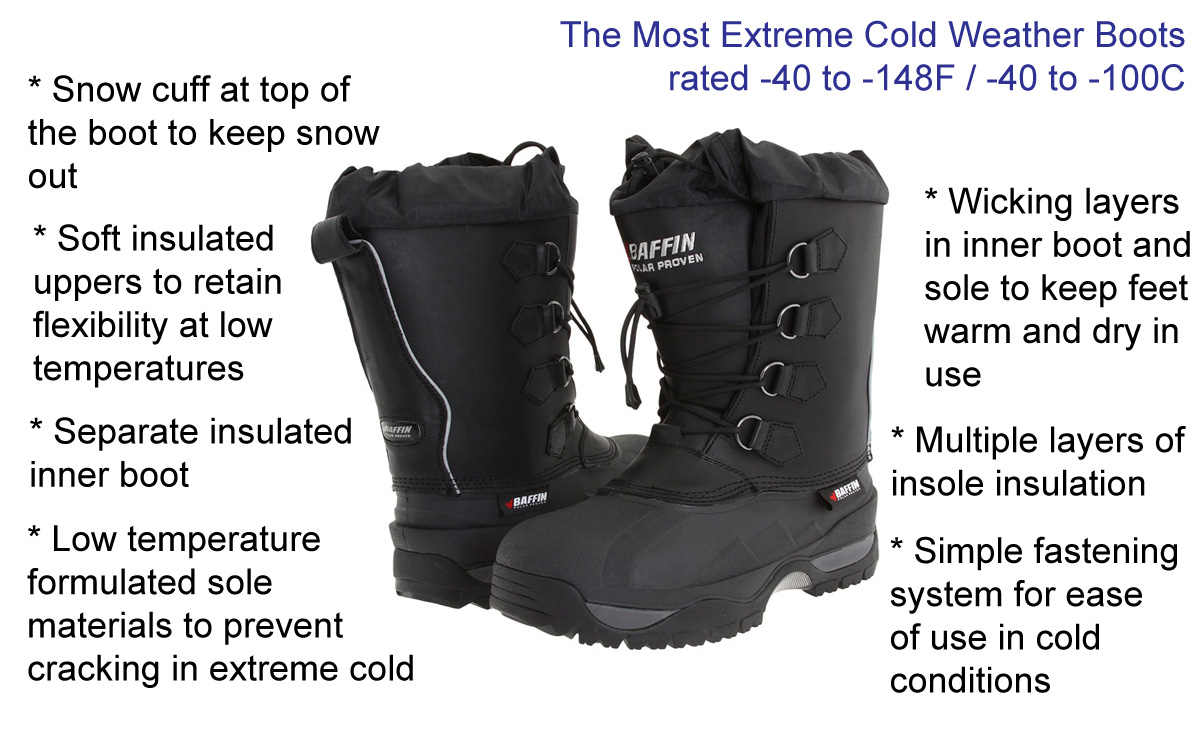
Very low temperature cold weather boots
manufacturer
rated down to -148 F / -100 C
Men's
Women's
Ordinary leather or synthetic hiking
boots aren't warm enough for very cold conditions,
even with an extra pair of socks.
Boots for extreme
cold weather conditions have a different construction,
they have soft uppers, thick rubber or synthetic soles,
insulation that is often removable and thick insoles
to prevent heat loss downwards to the snow and ice.
The flexible uppers and a lacing system or adjustable
buckles allow you to get them on while already wearing
one or more pairs of thick socks (and gloves), and allow
for flexibility of fit. It is important not to squash
socks down too much as trapped air is the real insulator.
These kind of boots are great at keeping you warm
and are suitable for most activities at low temperatures,
though you'll need something more specialist for
exceptionally rugged terrain or climbing. If you intend
to walk or stand around on flat-ish ground in incredibly
cold conditions, they will fulfill their function admirably.
Boots for cold weather are going to be bulky and heavier than those for warmer temperatures, all that insulation leads to wide uppers and a hefty sole to keep the cold away. In the coldest temperatures, there is no getting away from this. There is no super thin or ultra light insulating or heat reflective material that can avoid this, whatever the advertising material says.
Cold Weather Winter Boots
for Less Extreme Conditions

Mens
|
Women's
Boots for your Antarctic Trip
If you're planning on a trip
to Antarctica you'll need some suitable
substantial footwear. These notes are specific
to those going to Antarctica, but are applicable to
any hiking boots that you may need for cold climates
and rugged terrain.
Antarctica is rugged.
There aren't any footpaths and walking will be at
best on sandy or pebble beaches. The landscape that
is not snow and ice is rocky, pretty rough and rarely
flat. So a good solid substantial sole to any footwear
is needed so that you don't feel all of those rugged
Antarctic rocks too directly.
Summer
temperatures in coastal regions where most visitors
go will be at about temperate Northern hemisphere winter
levels. It may well get below freezing point,
so the boots should be warm enough and roomy enough
to take a pair of under socks and also thicker warmer
hiking socks.
Your footwear needs to be warm, water-resistant, supportive (at least ankle height) and with a good sole. Comfortable also helps of course and fortunately modern boots are much, much better than they used to be not so many years ago. Gone are the days of breaking in boots long before you needed to use them in earnest from a stiff incompliant starting point.
Also gone are the days when it was necessary as my grandfather advised me to my great horror as a fastidious teenager, to wee in them and leave them over-night (that's what they used to do in the army apparently - India, Northwest Frontier circa 1922).
It is sensible to get used to your boots and wear them around town or at least the house for a while before you set off for the airport to go south. It's not a good idea to put them on for the very first time in your cabin to go ashore and see your first penguin colony close-up. They arrive pretty much ready-to-go, but as with all footwear it also depends on how standard your feet are!
Socks - Don't "spoil
the ship for a ha'porth o' tar". Get some
nice comfy warm socks too. A good quality light-weight
pair for next to your skin and then some "hiking"
socks to go over these. These are usually made so as
not to have seams in uncomfortable positions and may
be specially cushioned on the areas where the weight
is taken.
Hiking Socks:
Midweight
|
Heavyweight
Antarctic Summer Boots
Cold and wet conditions

Waterproof cold weather
boots
manufacturers rating
down to - 40 F / - 40 C
Men's |
Women's
As you will be on a ship and making boat landings ashore, waterproof boots are very useful! While you won't be deliberately wading through water, a missed footing into just a couple of inches of water could result in an uncomfortably soggy foot for quite a while afterwards.
For use in and around boats in the Antarctic summer, the modern take on rubber wellington style boots are ideal with a close fitting and insulated neoprene upper.
They are much better for walking in than traditional wellington boots and are widely used in Antarctica by scientists, guides and tourists alike . They are waterproof up to the top so you don't have to worry when getting in or out of the zodiac in shallow water and you can be comfortable walking around in them all day long.
Clothing for cold conditions - layering is the key
- Layer one: underwear / base layer (can be short and thin or long and "thermal")
- Layer two: the insulating layer, tops & pants
- Layer three: outer shell layer
Women's Winter Boots
Men's down the page
Recommended for Cold Weather
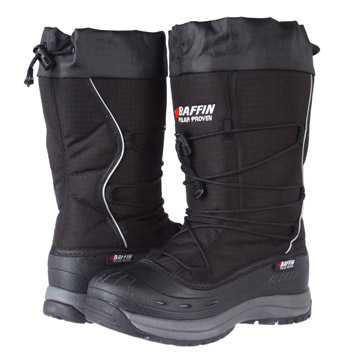 Baffin
Snogoose - Women's
Baffin
Snogoose - Women'sRated -40F / -40C, 100% synthetic, rubber sole, inner boot
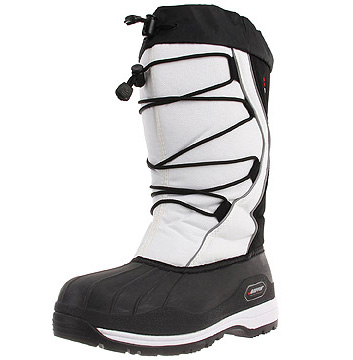 Baffin Ice Field - Women's
 Rated: -100C /-148F, 7 layer inner boot, rubber sole
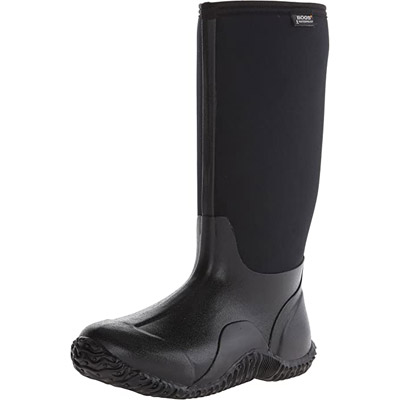 Bogs Classic High No Handle - Women's
Waterproof Insulated Rain and Winter Snow Boot, Rated -40F / -40C - Men's
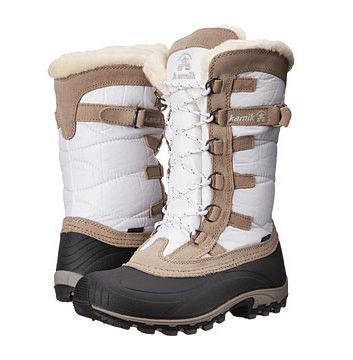 Kamik
Snowvalley - Women's
Kamik
Snowvalley - Women's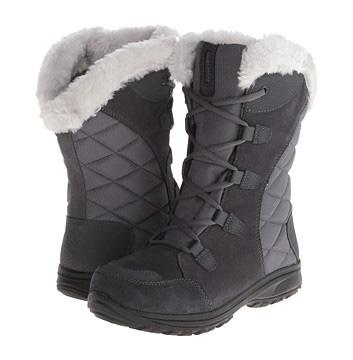 Columbia Ice Maiden II - Women's
Rated -25F /-32C, textile and suede upper, waterproofed, 200g insulation
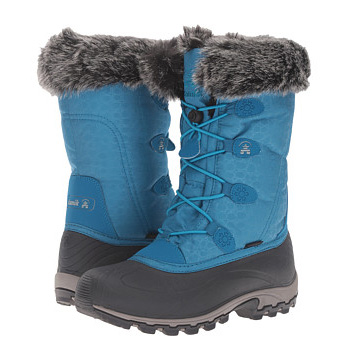 Kamik
Momentum Boot - Women's
Kamik
Momentum Boot - Women'sRated -25F / -32C Waterproof boot with lace closure, grippy tread, 10+ colors!
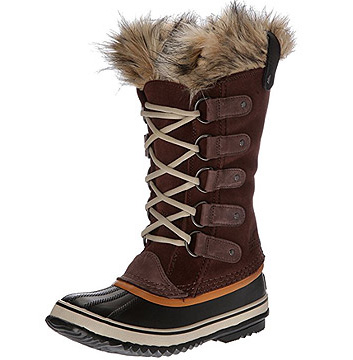 Sorel
Joan of Arctic Boot - Women's
Sorel
Joan of Arctic Boot - Women'sRated -25F / -32C, waterproof, leather upper, rubber sole, faux fur collar
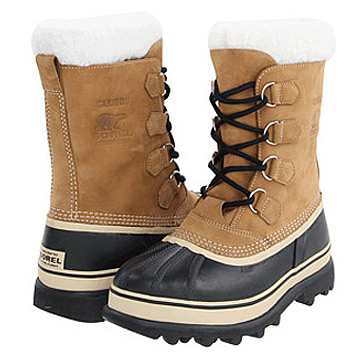 Sorel
Caribou - Women's
Sorel
Caribou - Women'sWaterproof, rated -40F / -40C, removable 9mm felt inner boot, extra insulated sole Men's Caribou
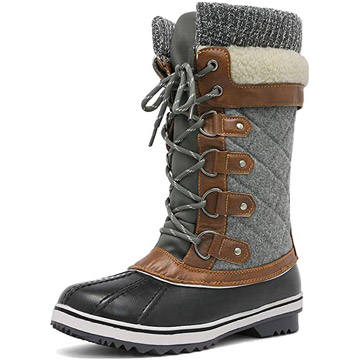 DREAM
PAIRS Mid-Calf Waterproof Snow Boots - Women's
DREAM
PAIRS Mid-Calf Waterproof Snow Boots - Women'sWarm, water resistant and durable
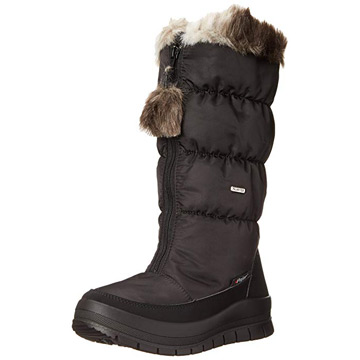 Aleader
Mid-Calf Winter Snow Boots - Women's
Aleader
Mid-Calf Winter Snow Boots - Women'sMen's Winter Boots
Recommended for Cold Weather
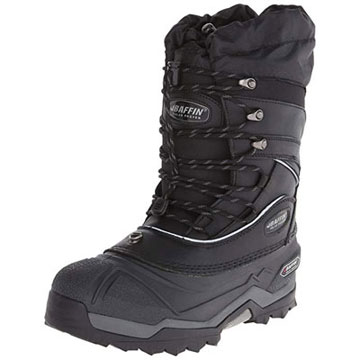 Baffin
Snow Monster - Men's
Baffin
Snow Monster - Men'sRated -94F / -70C, Tall leather and nylon boot quick-lace, grippy lugged outsole
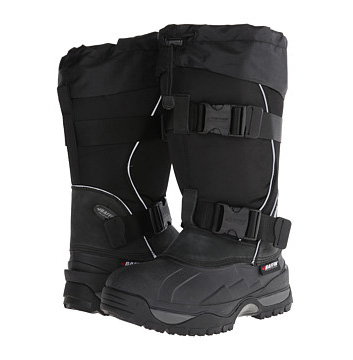 Baffin
Impact - Men's
Baffin
Impact - Men's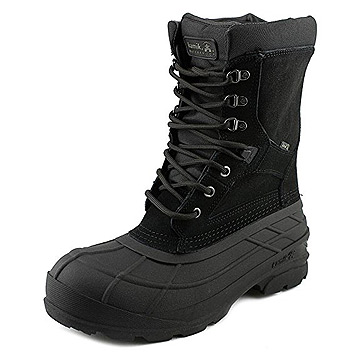 Kamik
Men's Nationplus
Kamik
Men's NationplusRated -40F / -40C, leather upper, 200g thinsulate insulation, traditional laces
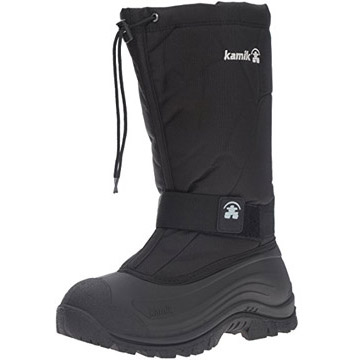 Kamik
Greenbay 4 - Men's
Kamik
Greenbay 4 - Men's 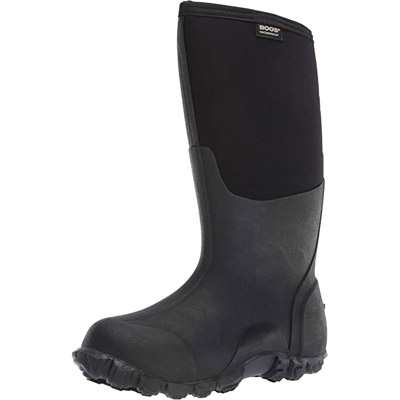 BOGS
Men's Classic High-m Snow Boot
BOGS
Men's Classic High-m Snow Boot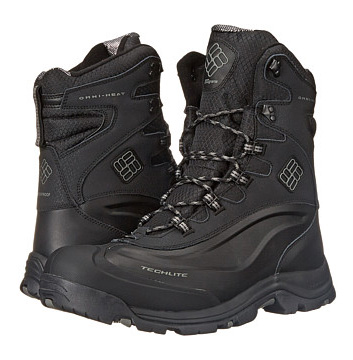 Columbia
Bugaboot III - Men's Waterproofed upper,
rated -25F / -32C, 200g insulation, tough sole
Women'sSorel
Caribou - Men's
Columbia
Bugaboot III - Men's Waterproofed upper,
rated -25F / -32C, 200g insulation, tough sole
Women'sSorel
Caribou - Men'sWaterproof, rated -40F / -40C, removable 9mm felt inner boot, extra insulated sole Women's Caribou
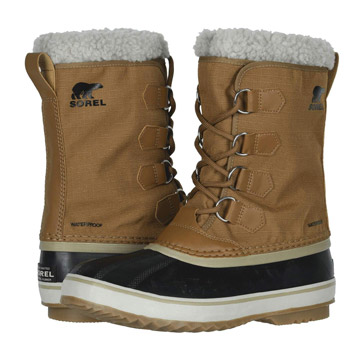 Sorel
1964 Pac nylon - Men's
Sorel
1964 Pac nylon - Men'sWaterproof outer, felt inner boot, rubber sole
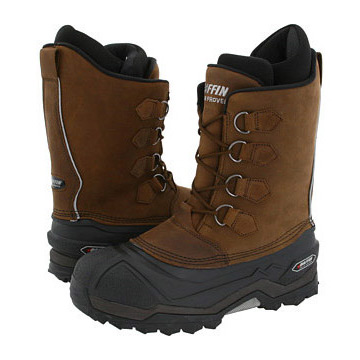 Baffin
Control Max - Men's
Baffin
Control Max - Men'sStay out all day in extreme cold weather, rated -70C / -94F
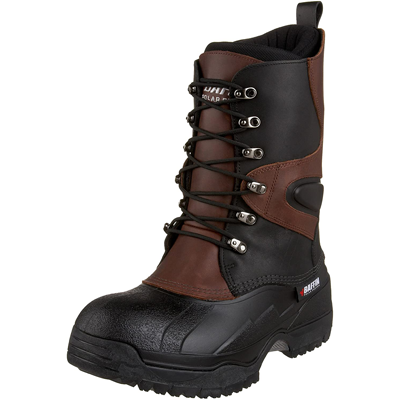 Baffin Apex - Men's
Rated -148F / -100C, 100% leather quick lace system, 8 layer inner boot
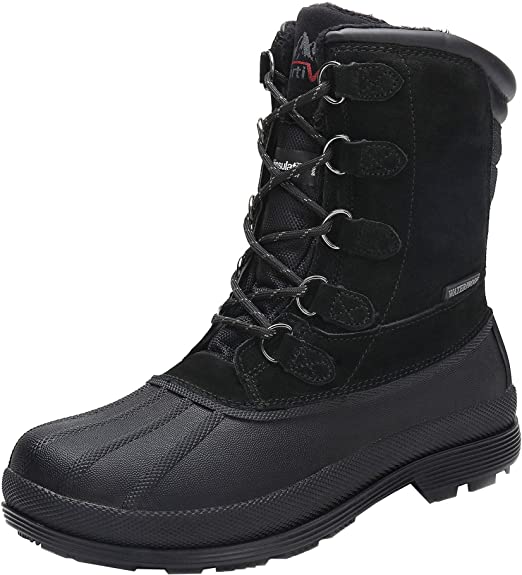
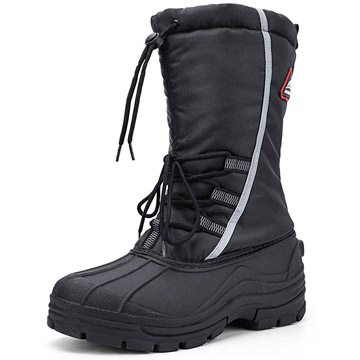
ALEADER Waterproof Snow Boots - Men's
Durable, textile and rubber cold weather boot, -25F rating