
 Travel
to Antarctica
Travel
to Antarctica
from the UK and Europe
Cruises in Antarctica, Polar Adventures With Cool Antarctica
and Antarctica Travels

Information:
Request
Contact |
Antarctic travel |
more details |
fly to Antarctica |
FAQ's |
clothing |
boots
Regions:
Antarctic Peninsula |
South Georgia |
South Shetland Islands |
Falkland Islands |
Arctic
Travelling to the Antarctic Peninsula
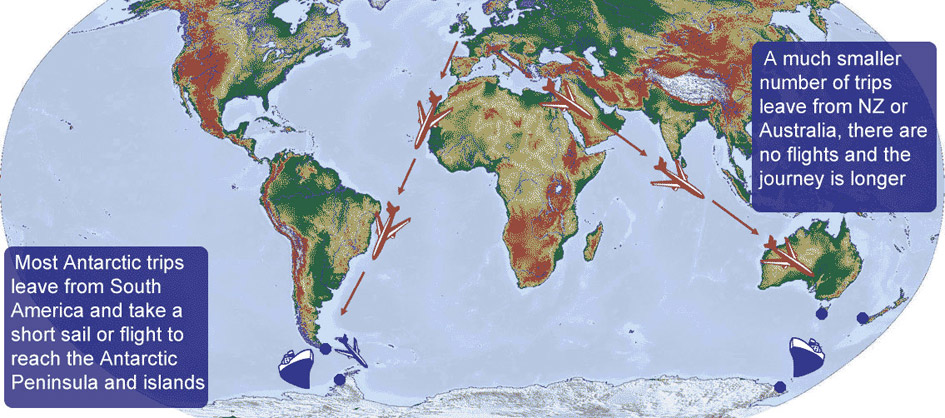
Antarctica can be reached from Europe via Tierra del Fuego at the tip of South America or from New Zealand (less frequently Australia). There are many more South American departures, the distance is closer, shorter trips are available and you can fly or sail, New Zealand departures are to the deep South.
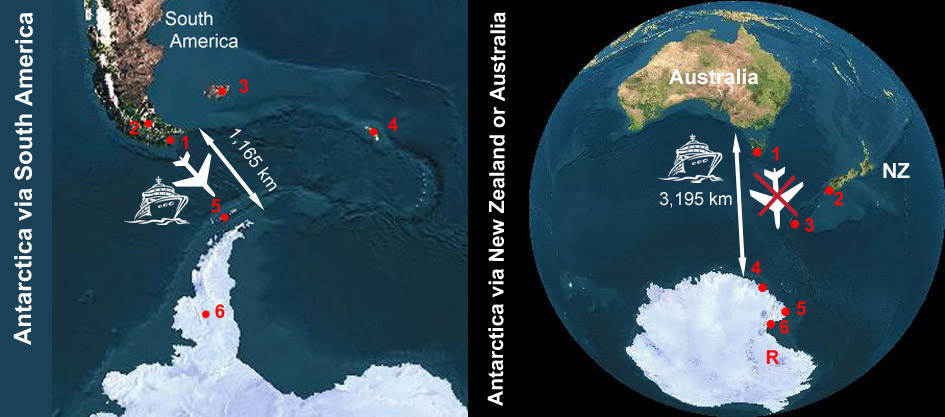
The majority of trips to Antarctica Leave from the South American port of Ushuaia in Argentina and visit the Antarctic Peninsula and the islands of the Scotia Arc (see map below) that stretches east from the southernmost tip of Tierra del Fuego, to South Georgia, the South Shetland Islands and back to the west again through the South Orkney Islands before joining the northernmost tip of the Peninsula.
There are a smaller number of trips that leave from Australia or New Zealand and visit Eastern Antarctica taking 6-7 days to sail there and the same back again so making the trips longer and consequently more expensive. These trips usually leave from Hobart, Australia or Invercargill, New Zealand, often leaving from one and returning to the other.
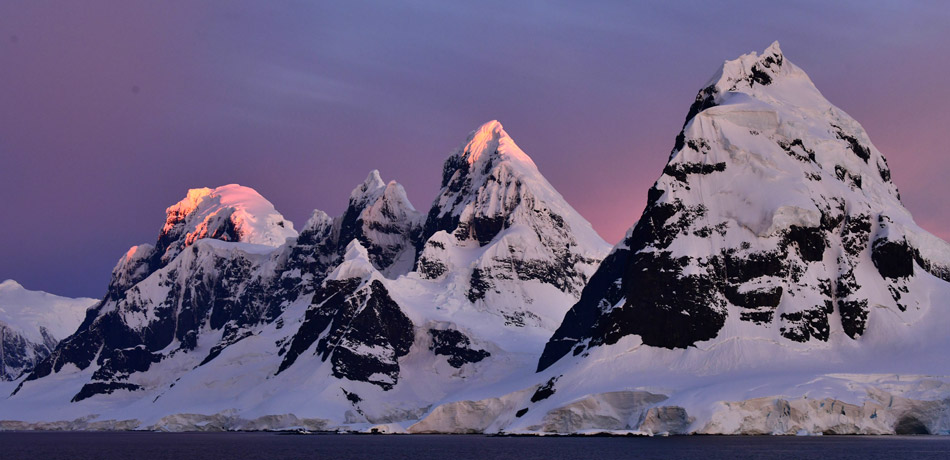
Fig 1. Trips to Antarctica leaving from the UK most commonly leave from Ushuaia, Argentina at the tip of South America and visit the Antarctic Peninsula and nearby islands.
There are a smaller number of trips that leave from Hobart, Australia or Invercargill, New Zealand (frequently leaving from one port and returning to another) that visit the more remote Eastern part of Antarctica.
| Distances | miles / km |
| 1 London - 2 Ushuaia, Argentina | 8,310 / 13,380 |
| 1 London - Hobart, Australia | 10,790 / 17,370 |
| 1 London - Invercargill, NZ | 11,800 / 18,990 |
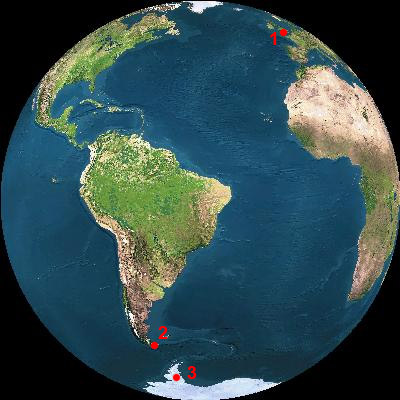
1
- London UK 2 - Ushuaia,
Argentina
3 - Antarctic Peninsula
Fig 2. Trips to the Peninsula region of Antarctica. Shorter trips visit the Peninsula 6 only and some nearby islands such as the South Shetlands 5. Longer trips may also take in the Falkland Islands 3 and / or South Georgia 4 and possibly some other landings en route.
Cruises most commonly go down the western side of the Peninsula as they are less likely to encounter problematic sea ice that is more likely found on the Eastern side in the Weddell Sea.
| Distances | miles / km |
| 1 Ushuaia - 3 Falklands | 480 / 770 |
| 1 Ushuaia - 4 South Georgia | 1,255 / 2,020 |
| 1 Ushuaia - 5 South Shetlands | 610 / 980 |
| 1 Ushuaia - Peninsula tip | 724 / 1,165 |
| 2 Punta Arenas - Peninsula tip | 870 / 1,395 |
| Peninsula top to bottom | 765 / 1,230 |
| Peninsula top to Antarctic Circle | 280 / 450 |
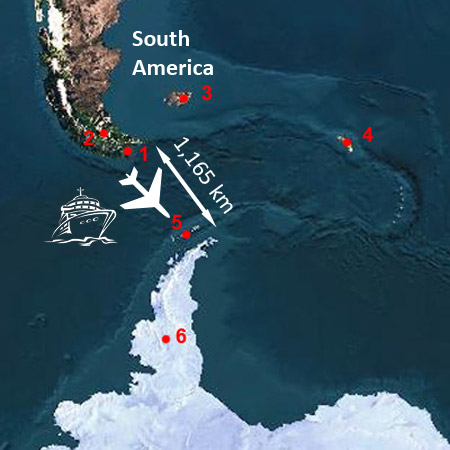
1 - Ushuaia,
Argentina, 2 - Punta Arenas, Chile
3 - Falkland Islands / Islas Malvinas,
4 - South Georgia
5
- South Shetland Islands, 6 - Antarctic
Peninsula
Travel to the Ross Sea / Commonwealth Bay Region - Eastern Antarctica
Fig 3. Trips to the more remote Eastern side of Antarctica usually leave from Australia and New Zealand often Invercargill / Port of Bluff in New Zealand 2, Invercargill has the airport, Bluff, 30km away by road has a deep-water port. Less commonly trips may leave/return from Hobart, Australia 1, and Dunedin, New Zealand (about 180 km / 110 miles from Invercargill).
The trip may depart and return to the same port or leave from one and return to another in either direction. It takes about six to seven days sailing to reach Antarctica from Australia or New Zealand, the journey there and back is usually broken up with visits to the wildlife rich Macquarie Island 3 and others such as Snares, Auckland and Campbell Islands that lie between Macquarie and New Zealand.
Once having reached Antarctica trips usually spend their time either in the Commonwealth Bay area 4 or the Ross Sea region between Cape Adare 5 and McMurdo 6 with possibly a short trip along the front of the Ross Ice Shelf R
| Distances | km / miles |
| 1 Hobart - 4 Commonwealth Bay | 2640 / 1640 |
| 2 Invercargill - 4 Commonwealth Bay | 2760 / 1720 |
| 1 Hobart - 3 Macquarie Island | 1500 / 940 |
| 2 Invercargill - 3 Macquarie Island | 1110 / 690 |
| 4 Commonwealth Bay - 5 Cape Adare | 1300 / 805 |
| 5 Cape Adare - 6 McMurdo | 760 / 470 |
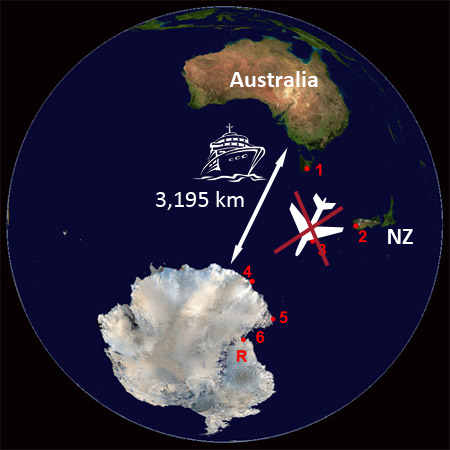
R - Ross
Ice Shelf, 1 - Hobart - Australia
2 - Invercargill / Port of Bluff -
New Zealand
3 - Macquarie Island,
4 - Commonwealth Bay
5
- Cape Adare, 6 - McMurdo / Scott bases
Eastern Antarctica, Ross Sea Region v Antarctic Peninsula Cruises
- Remoteness - You will see few if any other ships
and get a greater feeling of isolation and being at the end of the world,
this is a little visited part of the planet. You are going where the world's biggest icebergs
are and the most extreme weather conditions.
- Greater chance of rough seas due to longer
spent crossing the open ocean which can take 6-7 days in each
direction, no flights available.
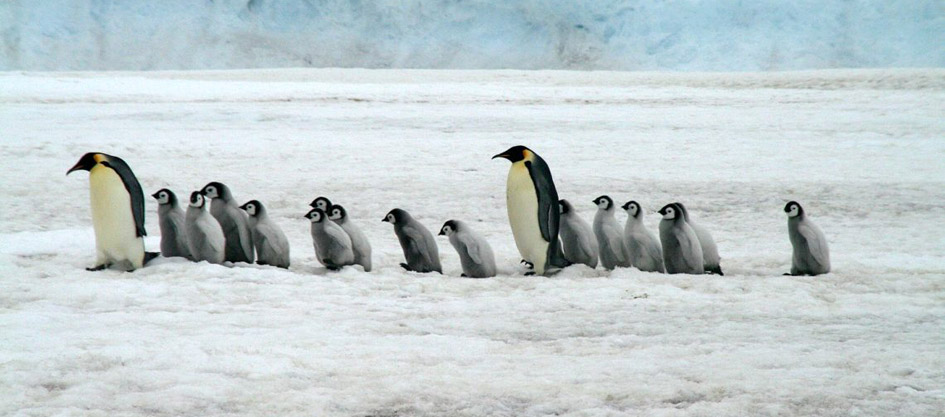
- See Emperor Penguins, the birds of the deep
south that rear their young in the depths of the Antarctic winter,
the largest of all penguin species.
- See Mount Erebus, the world's southernmost active
volcano and the Ross Ice Shelf, a 600km long wall of
ice between 15m and 50m high.
- Visit the huts of Scott, Shackleton, Mawson and other
Heroic Age explorers
depending on where your cruise goes. This is the area where
much of the early exploratory history of Antarctica was played out and
where historical remains still stand.
- Exclusivity - of the people who go to
Antarctica, only a small proportion visit regions other than the
Peninsula, there are relatively few trips here and they are often
fully booked up well in advance.
- Trip length of 26-30 days, sometimes there may be the possibility of a semi-circumnavigation over a similar time period from the Ross Sea to the Peninsula.
- It takes 2 days to cross the Drake Passage to reach the
Antarctic Peninsula, rough seas are possible though
short-lived, you can also fly across it in 2 hours on a fly-cruise
trip.
- Varied mountainous scenery with glaciers and icebergs,
some of the most beautiful scenery on earth.
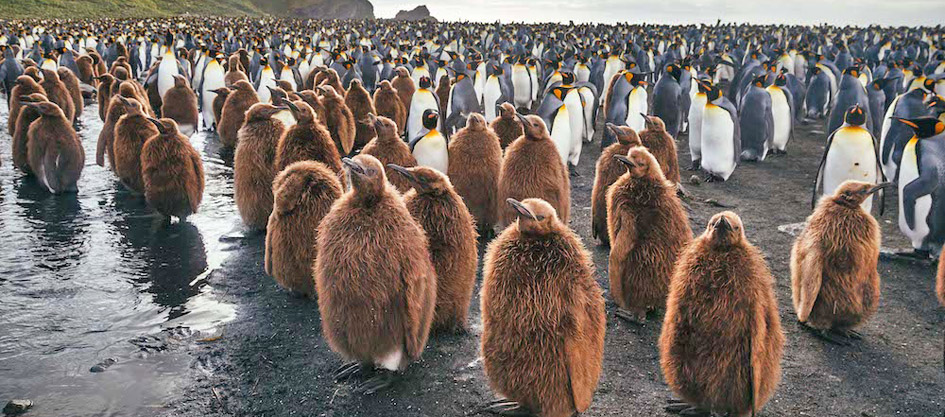
- The most wildlife rich area, with huge penguin colonies,
and many other breeding birds, seals are common and whales may be
seen. The sub-Antarctic islands you may visit en route are
particularly wildlife rich,
especially South Georgia.
- Historic preserved British Base, now a working Post
Office at Port Lockroy,
you may also visit other currently active research bases and historic sites.
- Easier to reach, The closeness of the peninsula
to the tip of South America means that travel time to reach
Antarctica here is much less than in the East. It also
means that a greater portion of the trip is spent in Antarctica
rather than travelling there and back.
- A larger number and variety of trips available, duration from 6-24 days, a wide range of ships and choice of travel dates and itineraries.
Antarctic Peninsula
Sample
Cruises - 2024 / 2025
| Trip | Highlights | Prices USD* |
|---|---|---|
|
Classic
Antarctic Peninsula Expedition 10 - 12 days |
South Shetland Islands, Antarctic Peninsula, Penguin Rookeries, Lemaire Channel. | $4,860 - $32,695 typically $10K-12K |
|
Antarctica Peninsula Basecamp 13 days |
Antarctic Peninsula trip with inclusive activities on offer such as hiking, snowshoeing, kayaking, mountaineering, and camping out under the South Polar skies. | $9,100 - $11,750 |
|
Crossing the Circle 11 - 23 days typically 12 - 14 |
Sail down the Antarctic Peninsula and cross the Antarctic Circle, South Shetland Islands, Wildlife, Scenery. | $7,700 - $66,367 |
Air-Cruise, Fly the Drake
Sample
Cruises - 2024 / 2025
| Trip | Highlights | Prices USD* |
|---|---|---|
|
Antarctic Peninsula, South Shetland Islands. Fly across the Drake
Passage 6 - 14 days typically 8 |
Fly across the Drake Passage in 2 hours to join your ship, cruise the South Shetland Islands and western Antarctic Peninsula. Spectacular scenery, glaciers, icebergs, penguins, seals and whale sightings. Limited number of sail one way, fly the other trips. | $4,995 - $36,495 typically $12K-14K |
South Georgia with the Falkland Islands
and / or
Antarctic Peninsula
Sample Cruises - 2024 / 2025
| Trip | Highlights | Prices USD* |
|---|---|---|
|
South Georgia, Antarctic Peninsula and Falkland Islands 17 - 23 days |
Sub-Antarctic South
Georgia has some
of the most unique and abundant wildlife on earth including the
world's biggest King Penguin colony, one of the world's largest
concentration of Southern Elephant Seals, and many other
penguins, whales, seabirds and seals all with a background of the
Alps dropped in mid-ocean. Falklands Islands - a British colony in the South Atlantic with wild places and diverse abundant wildlife. The Antarctic Peninsula is Antarctica proper with icebergs, glaciers and wildlife. |
$11,556 - $48,191 |
|
South Georgia and Falkland Islands 17 or 21 days |
$9,995 - $25,990 | |
|
South Georgia and Antarctic Peninsula
15 or 20 days |
$13,200 - $37,116 |
* Prices are per person. the lowest price is usually for triple occupancy in a basic cabin, the highest for double occupancy in the best available suite.
Options such as kayaking are usually booked when the cruise is booked, they may be at additional cost and have limited availability - it may be too late once the cruise has started.
Contact me about my trip to Antarctica!
Please complete the form
and an Antarctic Expert will contact you
Departures from late October to late March
Our partner company, Antarctica Travels, passionately help people to reach their ultimate destination.
All enquiries will be answered from our office in Patagonia, Argentina.
Dozens of trips - unique combinations of ship + itinerary
Choice of ships - 67 to 199 passenger capacity
Prices from $5,900 per person
6 to 28 days
Please note - we cannot help directly to find employment in Antarctica, please do not use this form to request any other information than for Antarctic tourist trips
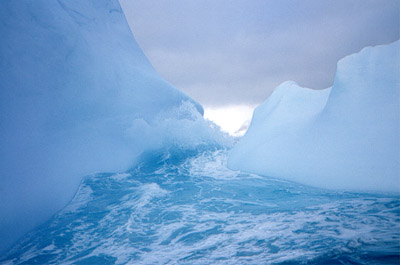
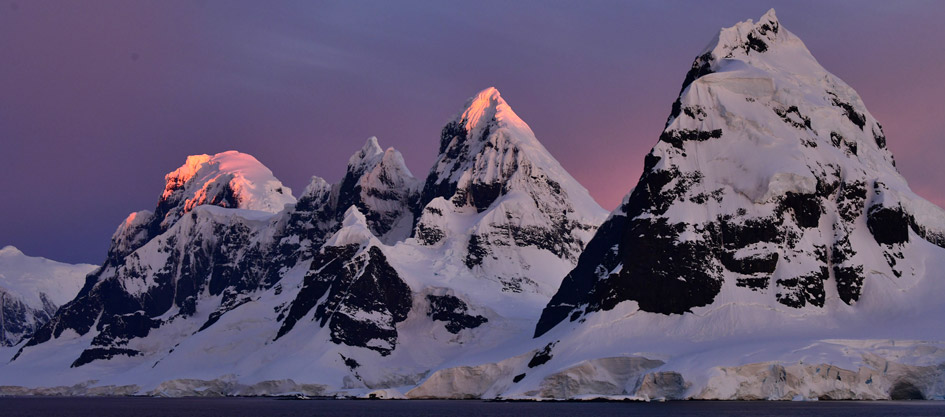
Picture credit: Top banner - Cuverville island, courtesy of LBM1948 used under CC BY-SA 4.0 licence