
Extreme Cold Weather Clothing
Antarctic Wear
2026-27
Warm clothing for Antarctica or any cold conditions, these principles apply to anywhere when the temperature drops and the wind blows. The "layer method" of dressing is more effective than a single bulky garment. Several layers are built up, each of which has its own part to contribute, insulating air is trapped between as well as within layers, flexibility is maintained as conditions change.
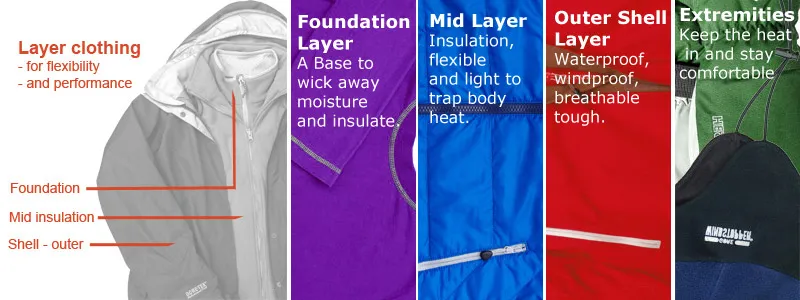
Foundation / Base Layer - A close fitting layer that provides Insulation and wicks away perspiration from the skin to maintain comfort.  The layer next to the skin, this should be
soft, comfortable and able to wick away perspiration
quickly so leaving you feeling dry in spite of your
exertions in the cold. Moisture in clothing
will also reduce the insulation, so it is important
to get sweat away from your skin and away from your
clothes so breathability is of the utmost importance.
To function most efficiently the foundation layer should
be close fitting to the body. The layer next to the skin, this should be
soft, comfortable and able to wick away perspiration
quickly so leaving you feeling dry in spite of your
exertions in the cold. Moisture in clothing
will also reduce the insulation, so it is important
to get sweat away from your skin and away from your
clothes so breathability is of the utmost importance.
To function most efficiently the foundation layer should
be close fitting to the body.A versatile layer, tops can be used as your outer layer indoors and help keep you toasty outdoors. Long johns go under thick, warm pants. It's unlikely you'll need any long underwear bottoms in the Antarctic summer in coastal regions, unless you really do suffer from the cold. If you're not going to an extreme climate but the extreme climate has temporarily come to you, a good thermal long underwear layer along with a hat, gloves, warm socks, thermal insoles and scarf or neck gaiter are the cheapest way of effectively dealing with the short-term conditions such as transport between home and work-place or wherever you need to go. Merino wool is
the gold standard of thermal underwear.
Not a budget option but it really
does deliver performance-wise. A soft and fine natural
product, the wool of the merino sheep, very good at
wicking sweat from the skin surface and naturally odor
resistant. Insulated base
layers - synthetic materials, more
affordable and a good performance. |
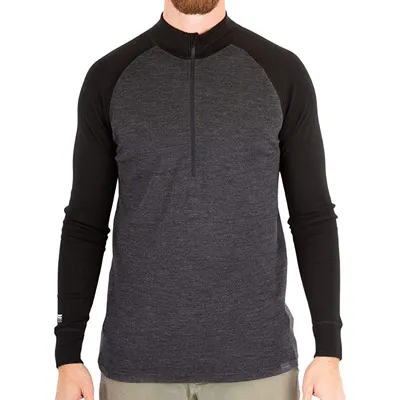 Men's
- MERIWOOL - midweight merino baselayer half-zip
Men's
- MERIWOOL - midweight merino baselayer half-zip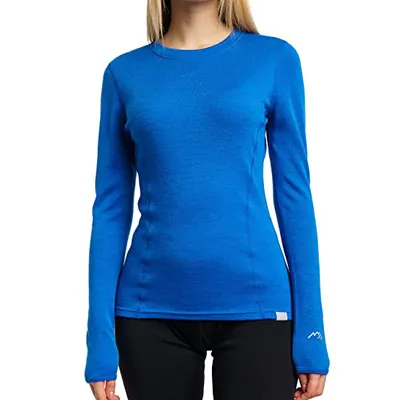 Women's - Merino.tech merino wool base layer
top - light, mid or heavyweight, lots of color choices
Women's - Merino.tech merino wool base layer
top - light, mid or heavyweight, lots of color choices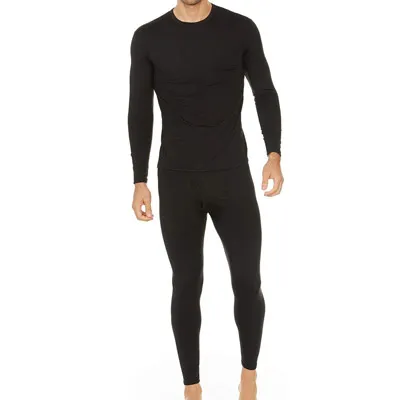 Men's
- Thermajohn Ultra Soft Thermal Underwear Set,
synthetic, choice of colors
Men's
- Thermajohn Ultra Soft Thermal Underwear Set,
synthetic, choice of colors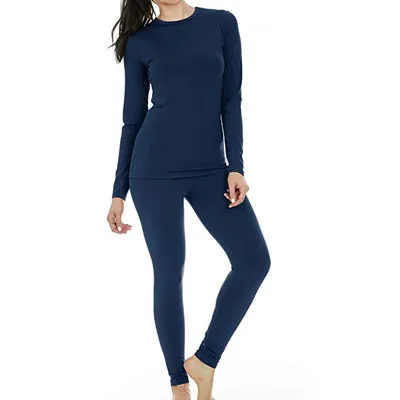 Women's
- Thermajane Ultra Soft Thermal Underwear Set,
synthetic, choice of colors
Women's
- Thermajane Ultra Soft Thermal Underwear Set,
synthetic, choice of colors|
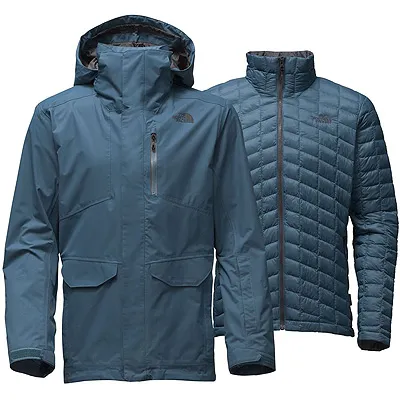
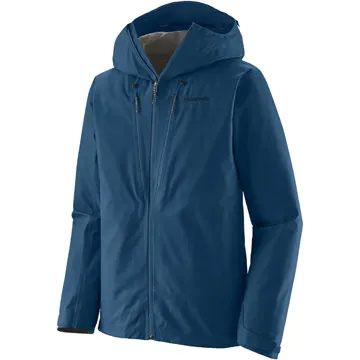
The Outer or Shell Layer - This layer provides direct weather protection, it must be windproof and may be waterproof depending on the temperature it will used at. It can be literally a "shell" or have additional insulation built in.
 Outer
/ shell layer, this needs to be windproof and may be
waterproof, jackets should always have
hoods for cold conditions. Outer
/ shell layer, this needs to be windproof and may be
waterproof, jackets should always have
hoods for cold conditions.The outer layer is particularly important and should have features such as draw-cords and fastening cuffs to prevent warm air being lost to the outside and to prevent snow finding its way into nooks and crannies (snow in the cranny is most uncomfortable). Waterproofing is not necessary for very cold weather as no rain falls, though if you intend to spend any time in boats waterproof is vital as you don't want to get ashore after bouncing over an excitable sea to find you are wet and cold for the rest of the day. When insulation is built into the outer layer, it may be synthetic or natural down, the latter still being considered one of the most effective options. Fully waterproof garments are not as able to transmit perspiration as readily as garments that are not fully waterproof and tend not to be as soft and flexible at low temperatures, choose according to your intended use. |


|
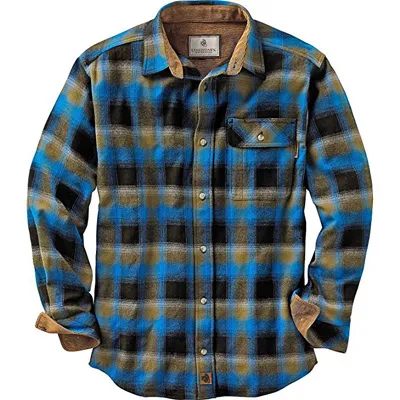
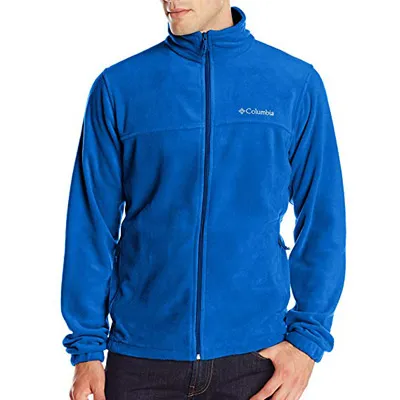
Mid Insulation Layer/s - A versatile layer that provides insulation while being easy to put on or take off. Buttons, zips and the like allow for versatility of ventilation at rest, during exertion or to quickly close everything up when the weather worsens.
Traditionally woolen sweaters and natural fiber pants were worn. These may still be used or they may be supplemented or substituted by more modern materials such as polypropylene fleece or lightweight down.  This layer should provide insulation while allowing ventilation and breathability for the passage and release of perspiration. Insulating Layers for the Upper Body Wool mix or synthetic shirt, woolen sweater, fleece or down sweater and /or jacket. Adjustability is important here, zips, buttons etc. At least one of these layers should be long at the back to avoid exposure of flesh during exertion. The insulating layer can be combined with the wind-proof or water-proof outer layer or could be separate. Don't be tempted to think that you will be able to get away with a fleece as your only outer layer however, despite new coatings and finishes, they just aren't wind or water-proof enough on their own. You might prefer a down-filled parka, while these are extremely warm and can easily be thrown on over a t-shirt for immediate serious insulation, they can be inflexible in terms of layer dressing when walking ashore, go for a more versatile lightweight one. 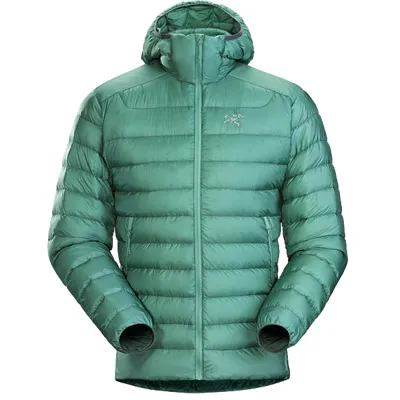 Lightweight
down, with or without hood Lightweight
down, with or without hoodMore lightweight down: men's | women's  Synthetic
insulated windproof jacket Synthetic
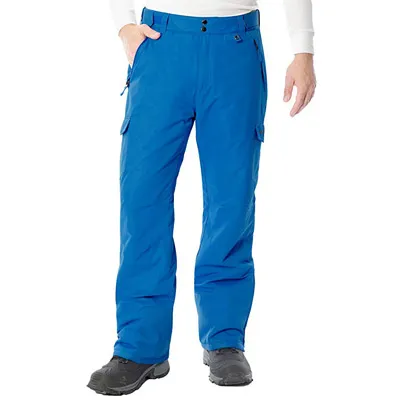
insulated windproof jacketmen's | women's Insulating Layers for the Lower Body Thick warm trousers of a natural material such as moleskin or heavyweight synthetic material such as polyester or nylon. I have worn moleskin (a kind of cotton, named for its texture and not made from either the skin or kin of moles) pants in both polar regions and wouldn't consider wearing anything else, for warmth, comfort and practicality they have no rival. Trousers should not be tight fitting as they can restrict circulation and don't trap so much of that insulating air, ditch the skinny fits until it warms up again. Lined pants - Men's Women'sMoleskin pants - Men's Women's |

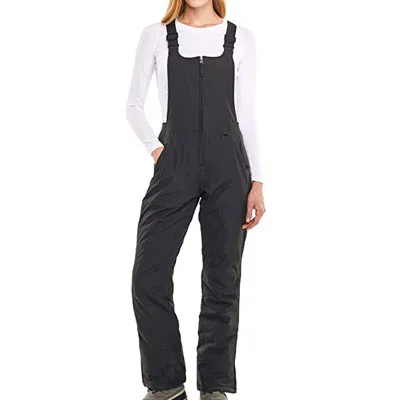

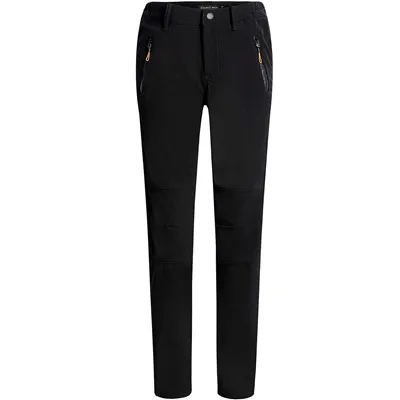 Women's - Winter Softshell Pants
Wind chill - A very important contributory factor to feeling uncomfortably cold is not considering the effects of the wind. Ensuring outer layer is made of properly windproof material rather than something that invites the wind in for a good blow around makes all the difference and can reduce the amount of clothing that you need overall.
At warmer temperatures, the wind makes little or no difference. As the temperature falls the wind begins to have a disproportionate effect. This table shows the effect that the wind speed has on perceived temperature, the numbers in the blue section are the equivalent reduction in temperature at that point.
The colder it gets, the greater the cooling effect of the wind.

e.g. at a wind speed of 10mph at +30F, the wind effect is 9 degrees of cooling, so it feels like +21F, by the time it's -20F, the same wind speed has an effect of a further 21 degrees, so it feels like -41F.
|
Protect the Extremities with
Accessories - Head, hands and fingers, feet and
toes, not forgetting ankles, wrists and neck.
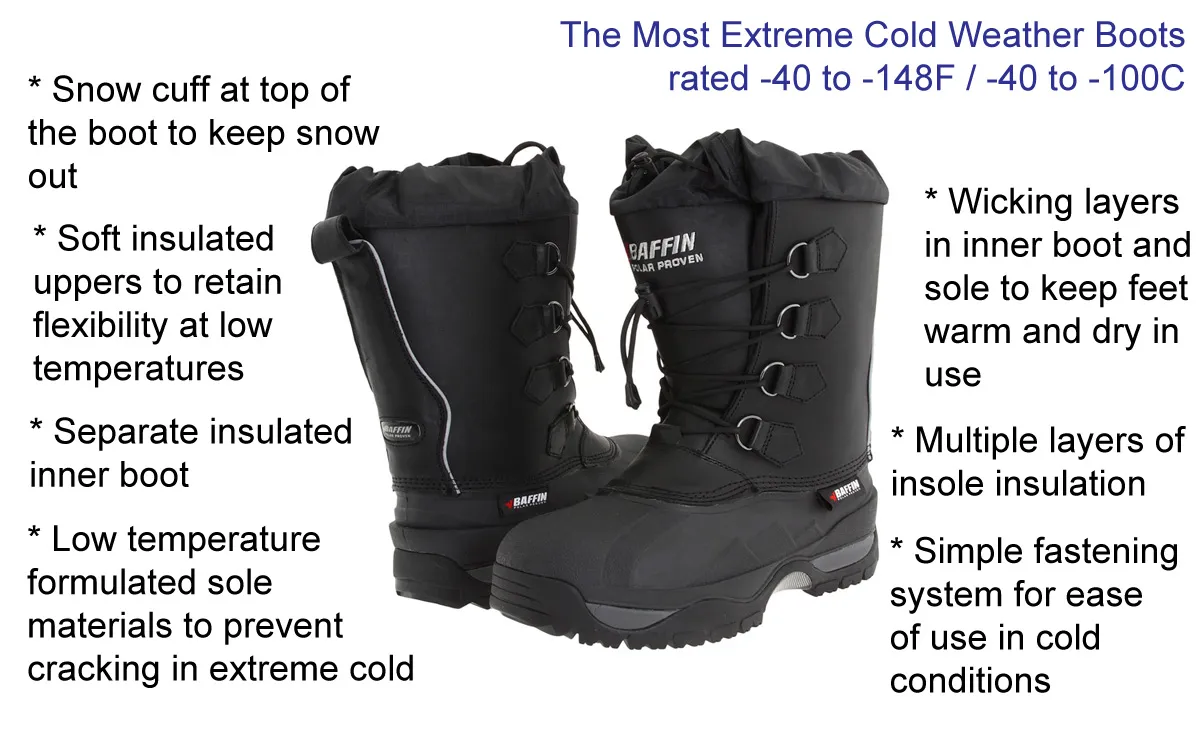
In extremis for the sake of survival, if the body is losing so much heat that it may be in danger, blood flow to those parts losing the most heat and that are "expendable" may be shut down to a trickle (this will not happen to your head however!). This could result in frostnip, frostbite and ultimately the loss of that body part, fingers and toes are in the most danger. FEET Boots Ordinary synthetic or leather hiking boots cannot be worn when it is very cold and specialist insulated boots such as Bunny Boots, or Mukluks are worn. These have soft insulated uppers, thick plastic or rubber soles and thick insoles to prevent heat loss to the snow and ice for really cold conditions. They are great at keeping you warm, but not so great for walking over rugged terrain or climbing.
Antarctic Winter
Boots
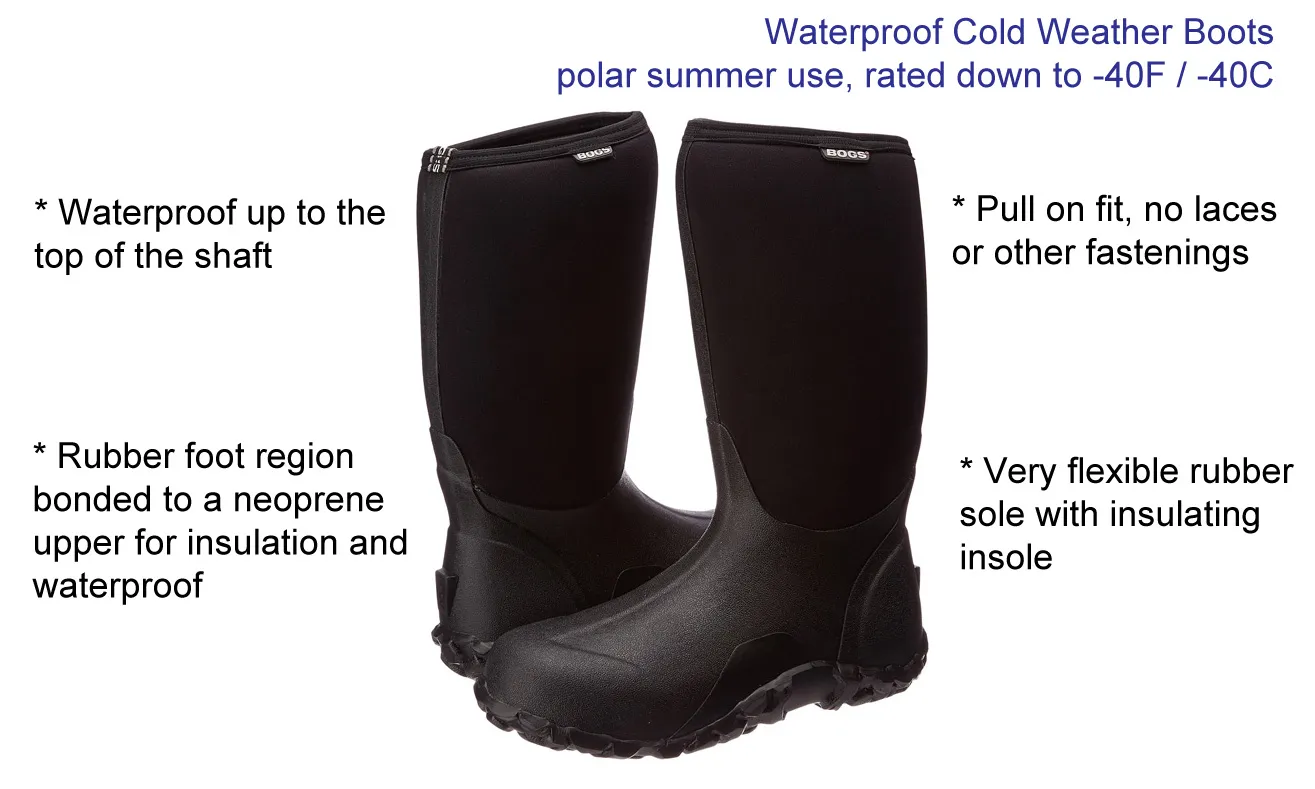
Antarctic
Summer Boots
Thermal
insoles - to stop the heat leaking away downwards  One
or two pairs of thick warm socks, wool
is the material to go for here, a small amount of a
synthetic material such as nylon aids durability and
some stretchy material such as elastane gives a snug
fit and stops them falling down. There are lots of
thick acrylic socks out there which while cheaper
just aren't as good as wool in cold conditions. One
or two pairs of thick warm socks, wool
is the material to go for here, a small amount of a
synthetic material such as nylon aids durability and
some stretchy material such as elastane gives a snug
fit and stops them falling down. There are lots of
thick acrylic socks out there which while cheaper
just aren't as good as wool in cold conditions.The layering principle also applies here with more than one pair of thin socks being warmer than a single thick pair. Don't be tempted to cram too many socks on so that your boots are tight. Air is the insulator and squashing it all out means you won't be as warm. A bit of trial and error to see what works for you and your preferred cold weather footwear, start with a thin pair of everyday socks as undersocks and then a thick pair on top and see how it goes. Thermal socks for: Hiking | Work | Hunting | Ski HANDS In very cold conditions 2 (or even 3) pairs of gloves or mittens according to the conditions and activity. The layer principle can also apply to the hands. A light first layer, then an insulating layer and/or a weatherproof outer layer depending on use. Usually starting with lightweight gloves in case you have to do something "fiddly", thin gloves are easier than mittens and infinitely preferable to bare fingers and then one or two pairs of mittens (if two the outer pair is usually just a "shell" layer). The outer pair should be wind proof while water-resistance is always very useful when in and around small boats.Ski-type gloves are good as they are warm and water resistant with it, they are usually adequate for polar coastal regions in the summer. A thin pair of glove liners as well as a warmer pair means that you'll be able to take photographs without taking them off. Fingerless gloves or ones with a flap so that you can push fingers through without taking them off are hopeless in my experience, don't bother unless you've used them before and know that you like them. In extreme cold weather mittens are much warmer than gloves, though by the time you have a couple of bulky pairs on to make your fingers lovely and toasty, your dexterity falls dramatically, so it depends on what you're doing. Skiing or snow-mobiling for instance and mittens will be fine, if you are taking photographs you'll find things more difficult. Sensor gloves: Lightweight gloves that allow you to use touch screen devices without needing to take the glove off. Men's Women's Men's winter gloves and mittens | Women's winter gloves and mittens | Glove liners HEAD
"When your feet are cold, cover your head."
- Inuit saying
While your hood will be wind-proof, you don't necessarily want to have it up all the time, a wind-proof hat can be far more convenient and give better visibility and freedom of movement, saving your hood until it is really necessary. Hats are probably the most personalized piece of cold weather kit you can get with lots of fancy colors and designs, be careful not to get carried away by form over function, those cute dangly pom-poms can get mighty irritating when the wind keeps whipping them against your face. While on the subject of pom-poms, the ones on top of the hat can make it impossible for your hood to fit snugly which means there's a large air gap resulting in less insulation. Winter hats - Men's | Women's | Balaclavas | Windstoppers IN-BETWEEN BITS
EYES
Goggles are important in colder weather or during blowing snow, helping to keep snow out of your eyes and providing coverage for the upper part of your face. |




 Sunglasses

Layers of clothing for Antarctica,
underwear and insulating layers on the left
and then alternative
shells to go over these depending on conditions and activity
levels to the right.

Accessories for the extremities are vital,
boots, gloves, head and eyewear for Antarctica
In the coldest
weather, the gloves and boots required become quite cumbersome
so limiting what can be achieved.
When fully equipped for extreme cold, there should be no exposed areas or "cold spots", you shouldn't be able to move and reveal skin or just a single layer at the wrists, neck, or midriff. Your outer layer should always remain the outermost layer; don't rely on an inner jacket or mid-layer to act as the shell, or you'll find yourself uncomfortably cold before you realize it. With goggles, a well-drawn hood, and a balaclava, it's possible to have no exposed skin at all.
Equally important is the ability to adjust your clothing easily. Features like draw-cords and pit zips (armpit zippers on the shell layer) allow for ventilation when opened or added insulation when tightened. Hoods, balaclavas, and hats can be added or removed to match changing weather and activity levels.
Antarctic gear often appears oversized when seen alone. Shirt, jacket, and sweater hems are long, boots are chunky, mittens are extended, and hoods are large. Overpants, in particular, may seem excessive, but they are designed to be worn outdoors in severe conditions, where you can't simply sit down and remove your boots first. Outer layers are meant to quickly go over everything beneath them, then be zipped, drawn, or tied snugly to trap heat close to the body.
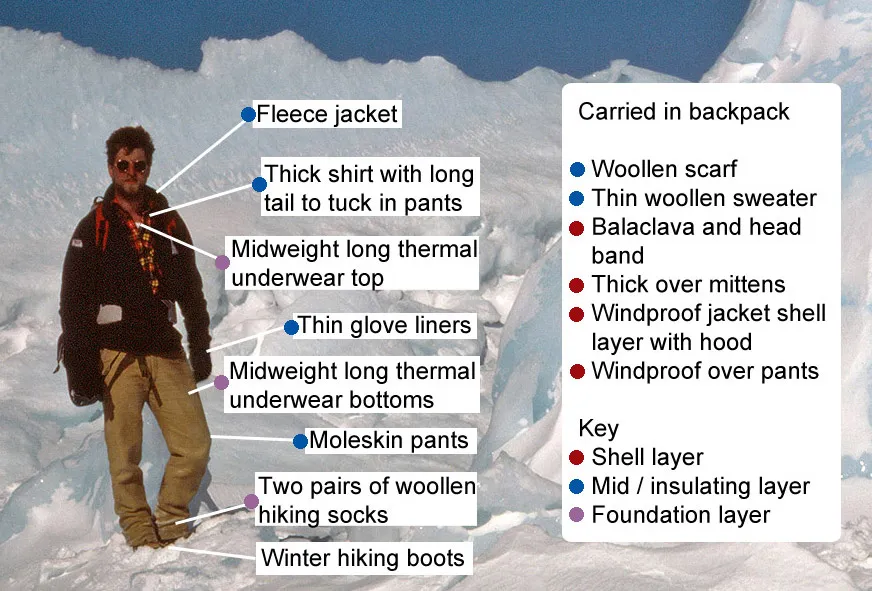
An Antarctic
Scenario
- layering for versatility
This is me in Antarctica on a relatively mild, calm late-winter day at around -15°C (5°F). The sun and lack of wind made it feel unusually warm for a short while, though the temperature could drop quickly, especially as the sun set early in the afternoon. This is a real use of cold weather gear in action, in the worst weather it is dangerous to venture far from base, so most people stay put.
We set out on a trip to visit icebergs frozen into the sea ice. The journey involved a rugged three-mile overland hike to reach the sea's edge, followed by a couple of miles across broken, snow-covered sea ice.
It was a day of constantly changing conditions: fluctuating temperatures, variable wind speeds, and differing activity levels, hard uphill walking followed by easier stretches on flat terrain. At any moment, severe Antarctic weather could arrive, so we needed to be prepared. Our clothing had to be versatile enough to handle changing conditions and capable of fending off the worst the weather might bring.